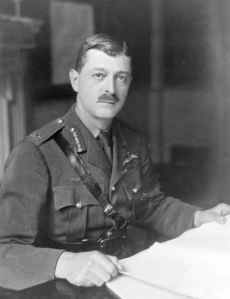
During the interwar period between 1918 to 1939, more strategic bombing theorists emerge, and one of them is a World War I artillery officer Giulio Douhet (1869-1930). He proposes to build up bombers that can attack daily, and the purpose of the air force is “to gain command of the air, so as to render an enemy ‘harmless’ and to gain command of the air is to be able to attack with impunity any point of the enemy’s body” (Meilinger 10). He publishes his ideas in the book Command of the Air.

Walther Wever (1887-1936), another strategic bombing visionist, is also a World War I veteran. A Luftwaffe officer, Wever has both the vision and the willpower to build a stronger air force for Germany: “His ideal German air industry is to develop what he sees as its most precious asset in the next war: a four-engined heavy bomber. The bomber Wever envisioned would have been able to carry a payload of some 3,300 pounds to a distance of at least 1,240 miles”. However, his grand idea falls on deaf ear, Luftwaffe’s senior commanders see little need to carry out such a plan (Colon).
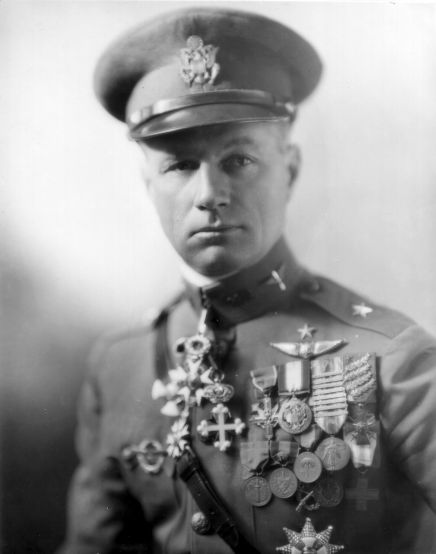
Like Wever, William Lendrum "Billy' Mitchell (1879-1936) in the United States believes in the bright future of planes. Yet, his expansion visionaries toward the third dimension also fall on deaf ears. As a World War I veteran, Mitchell sees the benefits of using aircraft as military weapons. He believes using aircraft to destroying supply lines and transportations, the war will end more rapidly and therefore more humane. However, his views are deemed as far-fetched and do not impress the dominated army and navy force. Mitchell begins to advocate his ideas publicly and devises plans that successfully showcase that the power of air force is superior to the navy. He also predicts in 1926, 15 years before the bombing of Pearl Harbor that Japan will initiate war in the Pacific: “Our most dangerous enemy is Japan and our planes should be designed to attack Japan, [and that] history and destiny unmistakably point to the next contest being for the possession of the Pacific” (Bradley 50).